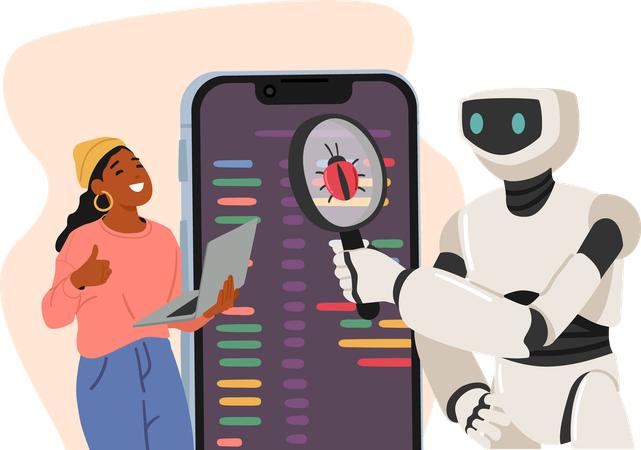
The rise of AI application builders like Base44 and similar platforms has fundamentally changed software development. Today, someone with little or no programming experience can describe an idea in plain English and have a working application generated in minutes. It’s an incredible leap forward for productivity and innovation.
But in all the excitement surrounding AI-generated software, one critical part of the development process is being overlooked:
Testing.
Building Software Has Become Easier
For decades, software development was limited by the time it took to write code. AI is changing that. We can now prototype applications, build internal tools, automate workflows and even generate complex business systems faster than ever before.
The barrier to creating software has never been lower.
However, generating code is only one stage of building successful software.
The Real Challenge Begins After the Code Is Written
An application isn’t successful simply because it runs.
It needs to be intuitive.
It needs to behave consistently.
It needs to guide users naturally through each task.
Most importantly, it needs to work reliably in the countless situations real users will encounter.
This is where human expertise still makes a significant difference.
User Interface Testing Is More Than Finding Bugs
Many people think software testing is just clicking buttons until something breaks.
In reality, effective UI testing asks questions like:
- Does this workflow make sense?
- Are users likely to understand what happens next?
- Is the navigation intuitive?
- Are important actions obvious?
- Is the wording clear?
- Does the application feel consistent across every page?
- Can someone unfamiliar with the system complete their task without training?
These are questions that require human judgement, empathy and experience.
AI Doesn’t Experience Your Application
AI can analyse interfaces.
It can compare layouts.
It can even identify certain usability issues.
But AI doesn’t become frustrated.
It doesn’t hesitate because a button is in the wrong place.
It doesn’t notice that an extra click makes a process feel unnecessarily complicated.
It doesn’t think like your customers.
Real users do.
And that’s exactly why human testing remains so valuable.
Every Business Is Different
An AI-generated application might be technically correct while still being completely unsuitable for the people using it.
A field service company has different workflows from a charity.
A retail business thinks differently from a law firm.
Healthcare staff interact with software differently from warehouse workers.
Understanding those business processes requires conversations, observation and practical experience.
No AI model can fully understand the unique culture, priorities and day-to-day challenges of every organisation.
AI Makes Testing Even More Important
Ironically, the faster software is produced, the more important testing becomes.
When applications can be generated in hours instead of weeks, there’s a temptation to deploy them immediately.
Without thorough testing, organisations risk introducing:
- Confusing user experiences
- Broken business workflows
- Security oversights
- Performance issues
- Accessibility problems
- Poor customer satisfaction
The cost of fixing these issues after launch is often much higher than identifying them early.
The Future Is AI and Humans Working Together
This isn’t an argument against AI.
Quite the opposite.
AI is becoming one of the most powerful development tools we’ve ever had.
It can dramatically reduce development time, automate repetitive tasks and help businesses innovate faster than ever before.
But software development has always been about more than writing code.
The most successful projects combine AI’s speed with human judgement.
Let AI generate the first draft.
Let experienced people challenge the workflows.
Let real users test the interface.
Let business experts validate that the software actually solves the right problems.
Final Thoughts
As AI continues to transform software development, we shouldn’t confuse building software with building great software.
Generating an application is becoming easier every day.
Creating an application that people genuinely enjoy using still depends on thoughtful design, careful testing and a deep understanding of how real people work.
For now—and likely for some time to come—that remains one of the areas where humans provide the greatest value.
The future of software isn’t AI replacing people.
It’s AI accelerating development while experienced designers, testers and technology professionals ensure the final product is something people actually want to use.
No responses yet